B2C SaaS · SMM · High-traffic e-commerce · 2023 — 2025
EngajaMaisVoce
Premium social-growth platform for the Brazilian market.
- Role
- Tech Lead · Full Stack & Infra Engineer
- Period
- Dec 2023 — Oct 2025
The project that turned me into a product engineer
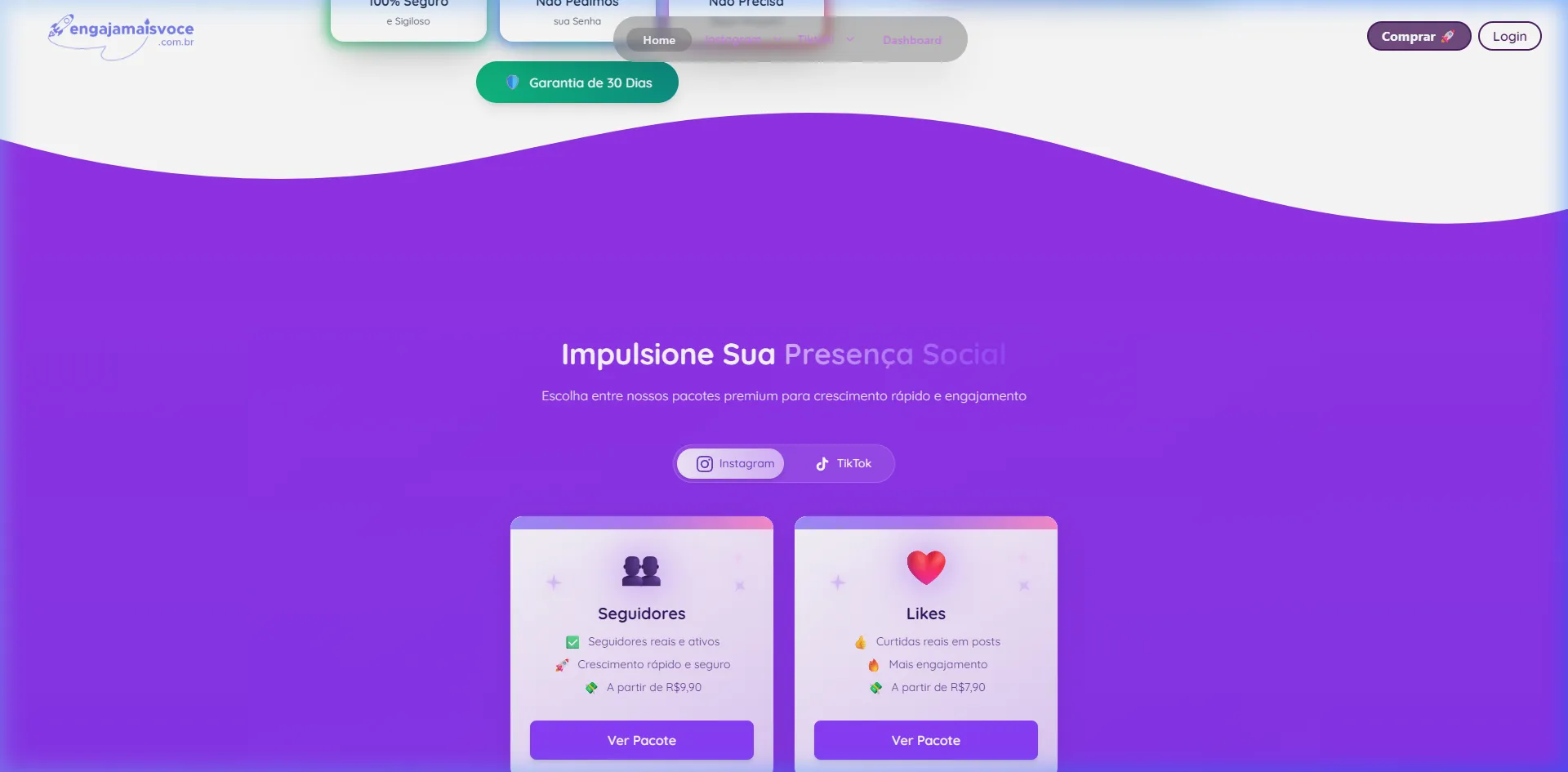
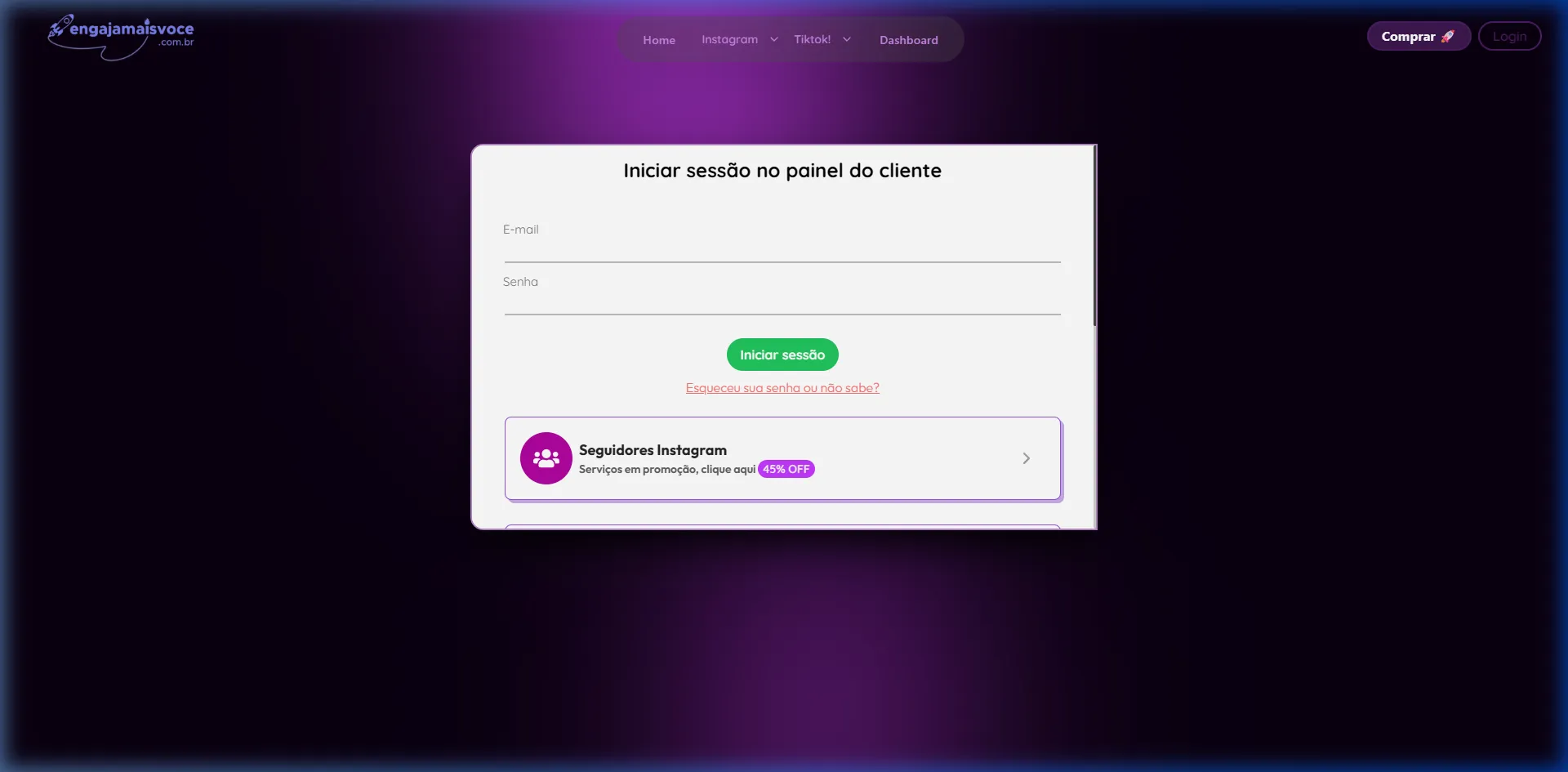
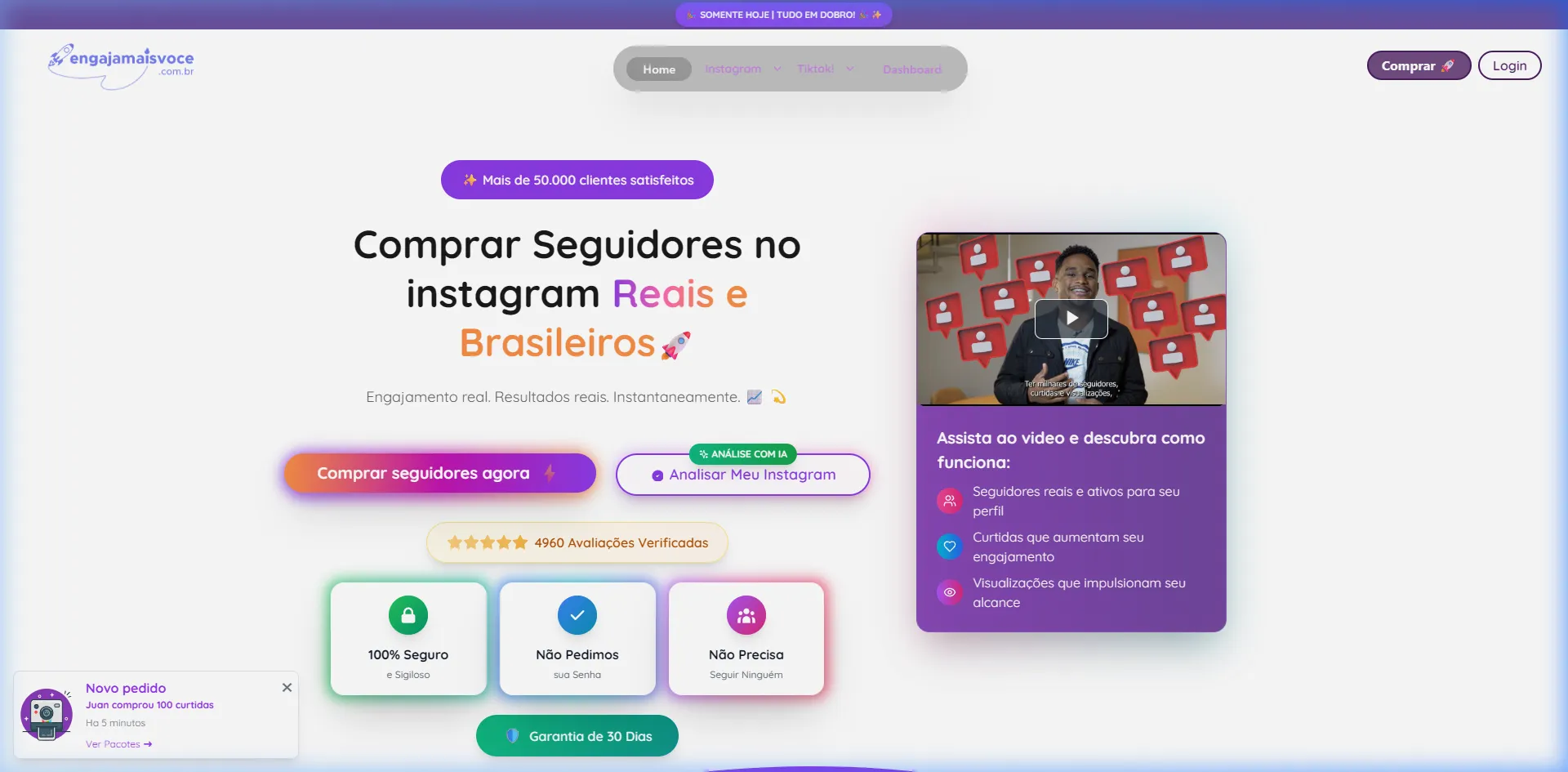
For two years I was the sole technical owner of EngajaMaisVoce, an SMM (Social Media Marketing) platform that sells real followers, likes and views on Instagram and TikTok for the Brazilian market. It wasn’t just writing code: I configured the whole infrastructure, stabilized integrations with six notoriously unreliable external SMM panels, mitigated continuous DDoS attacks and kept the operation alive with production hotfixes.
The core technical challenge
Most external SMM panels were unstable black boxes: they returned unformatted errors, failed silently or went down without notice. I built a standalone provider-API microservice that queues orders, runs automatic retries (refill) and cancels failed orders transparently for the end user. When something broke upstream, the internal system self-regulated and the user automatically received refund Coins, preventing massive chargebacks.
Architecture
Three independently-deployed repositories:
- ig-br-frontend — customer and admin UI. React 19 + TypeScript + Vite. RS Suite, Material UI and Tailwind for a dense but ordered visual layer. Zustand for global state and auth.
- backend-engajamais — main orchestrator of orders, payments, users and business rules. Node.js + Express + TypeScript under PM2. MySQL + Sequelize for transactional data (ACID) and MongoDB + Firebase for high-volume logs, notifications and real-time events.
- api-proovedor — resilient microservice that abstracts the six SMM panels and normalizes their behavior.
Multi-gateway payments
I implemented dedicated webhooks for the six most-used gateways in Brazil — Stripe, Mercado Pago, Woovi/OpenPix (PIX QR), PagHiper (boleto), AppMax and Cakto — with signature verification, idempotency, retry policies and reconciliation against the transactional database.
Infrastructure under fire
The site was under constant attack. I defended it from the ground up:
- Nginx reverse proxy with fine-grained rate limiting per endpoint and per IP.
- Custom Bash anti-DDoS scripts (
ddos_protection.sh,antiddos.sh) at theiptableslevel withlimit rate. - Geo-blocking with MaxMind GeoLite2 to reject traffic from unauthorized regions.
- Automatic SQL backups to Google Drive and AWS S3.
- Critical alerts via WhatsApp (Evolution API) and email (Twilio/Nodemailer) to the founders’ phone when the system detected anomalies.
Tracking and growth
- Server-side Facebook Pixel (Meta CAPI) with robust
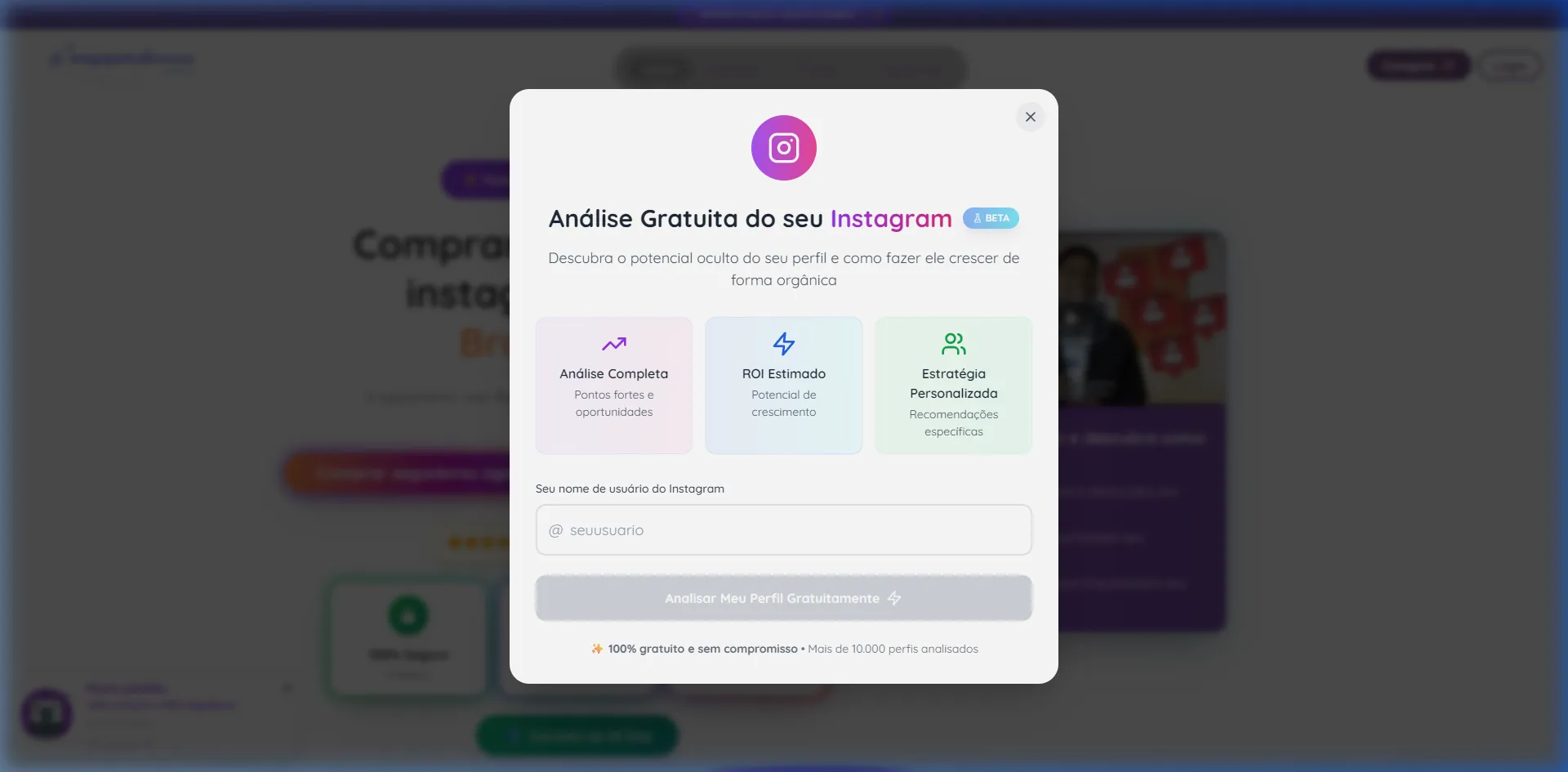
clientIdentifier,_fbpand_fbcto bypass ad blockers. - Free AI-powered Instagram analysis (DeepSeek) as a lead magnet: the user gets an automated report in exchange for entering the funnel.
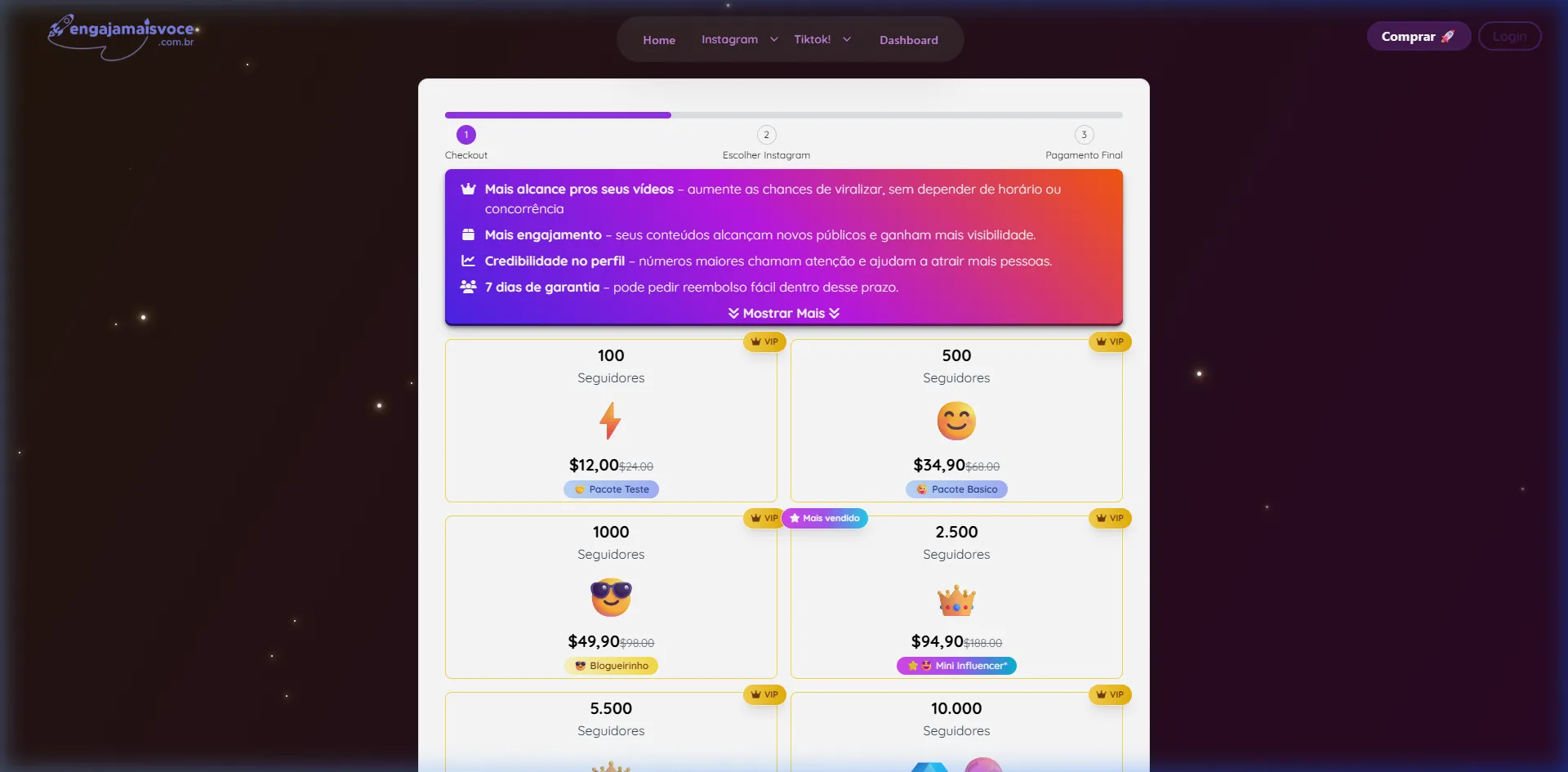
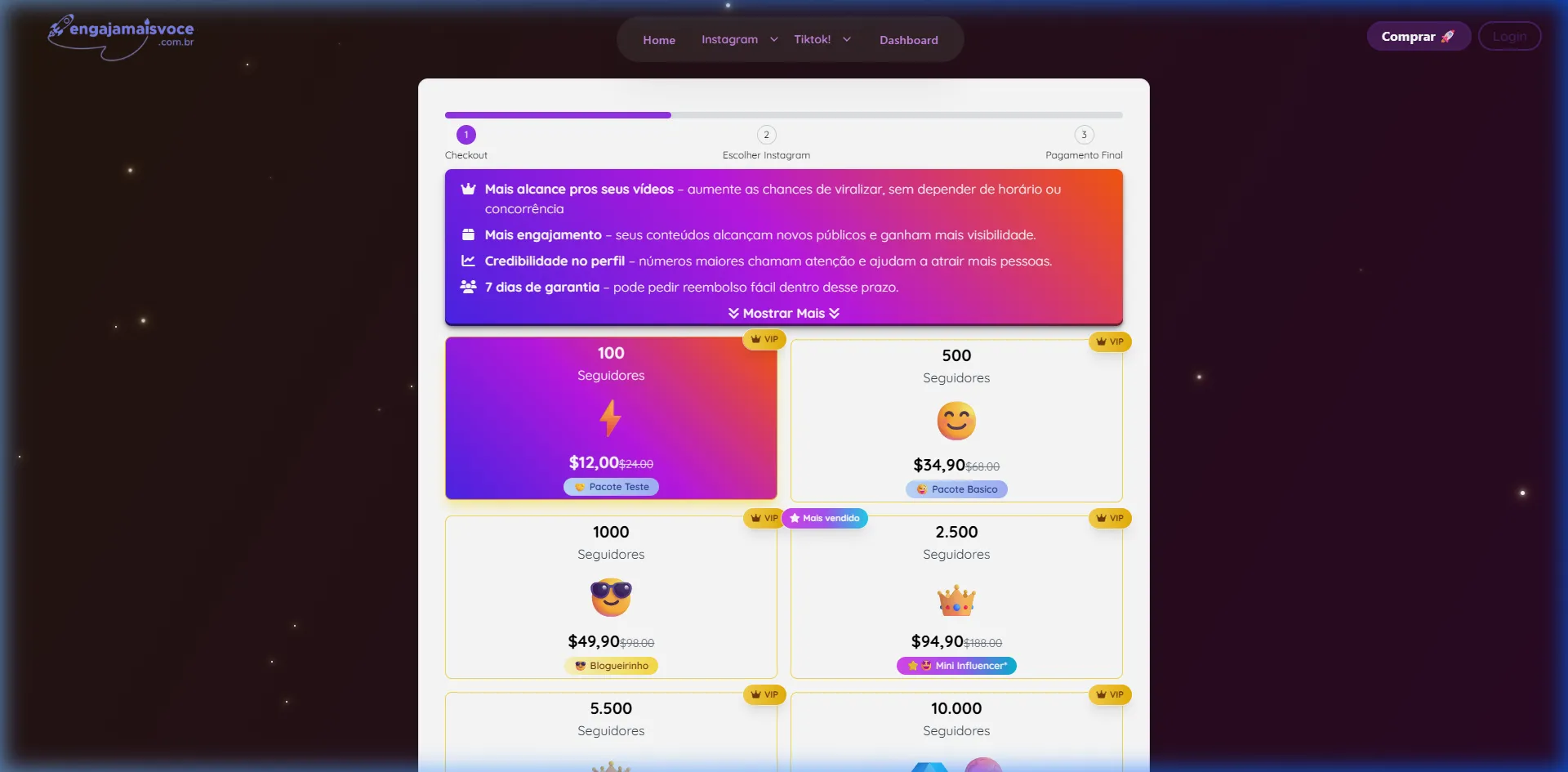
- 3-step checkout optimized for CRO, no passwords required to validate the public account.
Takeaways
This project pulled me out of “coder” mode and pushed me into product-engineer mode. I learned the hard way that code is useless if the infrastructure goes down, that external providers always fail eventually, and that every Pixel event lost in e-commerce is money burned. I spent entire nights solving issues on the fly, dealing with banned IPs and protecting the business. It’s the project that graduated me as a professional developer.
Screenshots